Author: orthodoxaustralia

  • Orthodox Survival Course has been translated and published in Romanian

    Fr Seraphim’s and Herman’s Orthodox Survival Course in Romanian has been released online with the great efforts of Ninel Ganea and some other people who have found it important enough to not let such masterpiece end up buried in history by the ignorance of many.


    Ninel Ganea, who has a philosophical background, rather than theological, found this piece of ennobling literature to be more valuable than all the philosophies of the world, maybe because the course really helps a sincere soul in search of the Truth penetrate the true essence of things to the point where it gets to discover something that tramples all philosophical wisdom of man under the foot of Orthodox Theology – the wisdom of God revealed to man?


    Is it not really telling, concerning the state of Orthodoxy today, that out of all the theologians that Romania has, none of them found it appropriate to publish such treasure, but a student of philosophy, who being unsatisfied with the answers the world has to offer, made the effort to continue his search for the higher wisdom?


    May God bless him and his benefactors for their efforts.
    The course has been published on his website and can be downloaded following the link below. There is also going to be a printed version in limited edition of 1250 copies, distributed freely to monasteries, churches and other centers of Orthodoxy.


    The printed version will also feature covers that are not included in the downloadable format.

    http://karamazov.ro/index.php/ce-citim/701-cartea-printelui-serafim-rose.html

  • New Lectures Of Fathers Seraphim Rose and Herman Podmoshensky

    Orthodox Australia Missionary Society have published a number of audio lectures of Fathers Seraphim Rose and Herman Podmoshensky, most of them not having been heard before.

    These resources are free to share and use, in full or in part, with the condition that Orthodox Australia Missionary Society is quoted as source !

    These audio lectures have also been made available on facebook at the following two links:

    https://www.facebook.com/groups/394015778078193/permalink/889802941832805

    https://www.facebook.com/groups/394015778078193/permalink/905469193599513

    FR SERAPHIM ROSE:

    https://www.mediafire.com/folder/fb0a7x7ledik1/Fr_Seraphim_Rose

    1. Fr Seraphim Rose – Orthodox Christianity And Suffering – The Sermons of Fr George Calciu – St Herman of Alaska Christian Pilgrimage Aug 1981
    2. Fr Seraphim Rose – The Search for Orthodox Christianity Today – St Herman of Alaska Christian Monastery Aug 1981 + Orthodox Sermon – On The Rich Young Man – By PriestMonk Anastassy
    3. Fr Seraphim Rose – How To Approach The Book Of Genesis – St Herman of Alaska Pilgrimage Aug 1981
    4. Fr Seraphim Rose – The 1st 2nd and 3rd Days of Creation – St Herman of Alaska Pilgrimage Aug 1981
    5. Fr Seraphim Rose – The 4th 5th and 6th Days of Creation – St Herman of Alaska Pilgrimage Aug 1981
    6. Fr Seraphim & Fr Herman – The Fall of Man from Paradise – St Herman of Alaska Christian Monastery Aug 1981
    7. Fr Seraphim & Fr Herman – Conclusion of The Fall of Man from Paradise Seminary – St Herman of Alaska Christian Monastery Aug 1981
    8. Fr Seraphim Rose – The Future of Russia and The End of The World – 03-04-1982
    9. Fr Seraphim Rose – Man’s Fall from Paradise – 14-Aug-1981
    10. Fr Seraphim Rose – Signs of The Coming of The End of The World – UC Santa Cruz CA 1981
    11. Fr Seraphim Rose – The Sixth Day of Man’s Fall From Paradise – St Herman of Alaska Monastery Aug 1981.

    FR HERMAN PODMOSHENSKY:

    https://www.mediafire.com/folder/hy1reortjjbb1/Fr_Herman_Podmoshensky

    1. Orthodox Moral Theology And The Contemporary World – Summer 1981
    2. The Life of St Herman of Alaska – St Herman of Alaska Pilgrimage Aug 1981
    3. Liturgy & Sermon – St Herman of Alaska Christian Monastery Aug 1981
    4. Fr Herman – Lecture Melbourne Australia 1982
    5. Fr Herman – Introduction to Orthodox Christian History and Theology – St Herman Of Alaska Monastery Aug 1981
  • Orthodox Prophecy vs. Orthodox Common Sense (Orthodox Worldview)

    I touched on this subject before, but i feel like i have to reiterate it. The purpose of a Christian life is to acquire that “Orthodox Common Sense” (the presence of the Holy Spirit) in our lives. Thus this needs to be our main focus. If we start to over-rely on fulfillment of certain prophecies as our main guidance (which prophecies will happen, make no mistake), we are defeating the purpose of having a Christian life in the first place. In most instances prophecies are not understood until after they are fulfilled and trying to discern “how far we are from this prophecy to fulfill or that prophecy to fulfill” is the incorrect Christian attitude that presents no spiritual benefits for the soul. Centering one’s spiritual life on a worldview based solely on examining prophecies is in fact anti-Orthodox.

    The Orthodox Common Sense on the other hand, can in fact offer practical guidance to conducting our day-to-day struggles and spiritual warfare and prepares us in all respects to confront what’s coming ahead.

    Trying to chase anyone who can “shed light on prophecies” rather than focusing on the above is in fact searching for “gurus” and not really seeking true Orthodox understanding.

  • PURGATORY – REFUTED BY THE Holy Fathers of the Church

    First Homily of St. Mark of Ephesus On Prayer for the Dead and Against the Roman Catholic Purgatory


    Inasmuch as we are required, preserving our Orthodoxy and the Church Dogmas handed down by the Fathers, to answer with love to what you have said, as our general rule we shall first quote each argument and testimony which you have brought forward in writing, in order that the reply and resolution in each of them might follow briefly and clearly.

    1. And so, at the beginning of your report you speak thus: “If those who truly repent have departed this life in love (towards God) before they were able to give satisfaction by means of worthy fruits for their transgressions or offenses, their souls are cleansed after death by means of purgatorial sufferings; but for the easing (or ‘deliverance’) of them from these sufferings, they are aided by the help which is shown them on the part of the faithful who are alive, as for example: prayers, Liturgies, almsgiving, and other works of piety.”

    To this we answer the following: Of the fact that those reposed in faith are without doubt helped by the Liturgies and prayers and almsgiving performed for them, and that this custom has been in force from antiquity, there is the testimony of many and various utterances of the Teachers, both Latin and Greek, spoken and written at various times and in various places. But that souls are delivered thanks to a certain purgatorial suffering and temporal fire which possess such (a purgatorial) power and has the character of an help–this we do not find either in the Scriptures or in the prayers and hymns for the dead, or in the words of the Teachers. But we have received that even the souls which are held in hell are already given over to eternal torments, whether in actual fact and experience or in hopeless expectation of such, as can be aided and given a certain small help, although in the sense of completely loosing them from torment or giving hope for a final deliverance. And this is shown from the words of the great Macarius the Egyptian ascetic who, finding a skull in the desert, was instructed by it concerning this by the action of Diving Power. And Basil the Great, in the prayers read at Pentecost, writes literally the following: “Who also, on this all-perfect and saving feast, art graciously pleased to accept propitiatory prayers for those who are imprisoned in hell [ literally in Greek”Hade”], granting us a great hope of improvement for those who are imprisoned from the defilements which have imprisoned them, and that Thou wilt send down Thy consolation” (Third Kneeling Prayer at Vespers).

    But if souls have departed this life in faith and love, while nevertheless carrying away with themselves certain faults, whether small ones over which they have not repented at all, or great ones for which — even though they have repented over them — they did not undertake to show fruits of repentance: such souls, we believe, must be cleansed from this kind of sins, but not by means of some purgatorial fire or a definite punishment in some place (for this, as we have aid, has not at all been handed down to us). But some must be cleansed in the very departure from the body, thanks only to fear, as St. Gregory the Dialogist literally shows; while others must be cleansed after the departure from the body, either while remaining in the same earthly place, before they come to worship God and are honored with the lot of the blessed, or — if their sins were more serious and bind them for a longer duration — they are kept in hell, but not in order to remain forever in fire and torment, but as it were in prison and confinement under guard.

    All such ones, we affirm, are helped by the prayers and Liturgies performed for them, with the cooperation of the Divine Goodness and Love for mankind. This Divine cooperation immediately disdains and remits some sins, those committed out of human weakness, as Dionysius the Great (the Areopagite) says in the “Reflections of the Mystery of those Reposed in Faith” (in The Ecclesiastical Hierarchy, VII, 7); while other sins, after a certain time, by righteous judgments it either likewise releases and forgives — and that completely — or lightens the responsibility for them until that final Judgment. And therefore we see no necessity whatever for any other punishment or for a cleansing fire; for some are cleansed by fear, while others are devoured by the gnawing of conscience with more torment than any fire, and still others are cleansed only the very terror before the Divine Glory and the uncertainty as to what the future will be. And that this is much more tormenting and punishing than anything else, experience itself shows, and St. John Chrysostom testifies to us in almost all or at least most of his moral homilies, which affirm this, as likewise does the divine ascetic Dorotheus in hsi homily “On the Conscience…”

    2. And so, we entreat God and believe to deliver the departed from (eternal torment), and not from any other torment or fire apart from those torments and that fire which have been proclaimed to be forever. And that, moreover, the souls of the departed are delivered by prayer from confinement in hell, as if from a certain prison, is testified, among many others, by Theophanes the Confessor, called the Branded (for the words of his testimony for the Icon of Christ, words written on his forehead, he sealed by blood). In one of the canons for the reposed he thus prays for them: “Deliver, O Saviour, Thy slaves who are in the hell of tears and sighing” (Octoechos, Saturday canon for the reposed, Tone 8, Canticle 6, Glory).

    Do you hear? He said “tears” and “sighing,” and not any kind of punishment or purgatorial fire. And if there is to be encountered in these hymns and prayers any mention of fire, it is not a temporal one that has a purgatorial power, but rather that eternal fire and unceasing punishment. The saints, being moved by love for mankind and compassion for their fellow countrymen, desiring and daring what is almost impossible, pray for the deliverance and daring what is almost impossible, pray for the deliverance of those departed in faith. For thus does St. Theodore the Studite, the confessor and witness of the truth himself, say, at the very beginning of his canon for the departed: “Let us all entreat Christ, performing a memorial today for those dead from the ages, that He might deliver from eternal fire those departed in faith and in hope of eternal life” (Lenten Triodion, Meat-Fare Saturday, Canon, Canticle 1). And then, in another troparion, in Canticle 5 of the Canon, he says: “Deliver, O our Saviour, all who have died in faith from the ever-scorching fire, and unillumined darkness, the gnashing of teeth, and the eternally-tormenting worms, and all torment.”

    Where is the “purgatorial fire” here? And if it in fact existed, where would it be more appropriate for the Saint to speak of it, if not here? Whether the saints are heard by God when they pray for this is not for us to search out. But they themselves knew, ad did the Spirit dwelling in them by Whom they were moved, and they spoke and wrote in this knowledge; and likewise the Master Christ knew this, Who gave the commandment we should pray for our enemies, and Who prayed for those who were crucifying Him, and inspired the First Martyr Stephen, when he was being stoned to death, to do the same. And although someone might say that when we do everything that depends on us. And behold, some of the saints who prayed not only for the faithful, but even for the impious, were heard and by their prayers rescued them from eternal torment, as for example the First Woman-Martyr Thecla rescued Falconila, and the divine Gregory the Dialogist, as it is related, rescued the Emperor Trajan.

    (Chapter 3 demonstrates that the Church prays also for those already enjoying blessedness with God — who, of course, have no need to go through “purgatorial fire”.)

    4. After this, a little further on, you desired to prove the above-mentioned dogma of purgatorial fire, at first quoting what is said in the book of Maccabees: It is holy and pious….to pray for the dead…that they might be delivered from their sin (2 Maccabees 12:44-45). Then, taking from the Gospel according to Matthew the place in which the Saviour declares that “whosoever shall speak against the Holy Ghost, it shall not be forgiven him, either in this world, nor in that which is to come” (Matt. 12:32), you say that form this one may see that there is remission of sins in the future life.

    But that from this there in no way follows the idea of purgatorial fire is clearer than the son; for what is there in common between remission on one hand, and cleansing by fire and punishment on the other? For if the remission of sins is accomplished for the sake of prayers, or merely by the Divine love of mankind itself, there is no need for punishment and cleansing (by fire). But if punishment, and also cleansing, are established (by God)…then, it would seem, prayers (for the reposed) are performed in vain, and vainly do we hymn the Divine love of mankind. And so, these citation are less a proof of the existence of purgatorial fire than a refutation of it: for the remission of sins of those who have transgressed is presented in them as the result of a certain royal authority and love of mankind, and not as a deliverance from punishment or a cleansing.

    5. Thirdly, (let us take) the passage from the first epistle of the Blessed Paul to the Corinthians, in which he, speaking of the building on the foundation, which is Christ, “of gold, silver, costly stones, wood, hay, stubble,” adds: “For that day shall declare it, because it is revealed in fire; and the fire itself shall prove each man’s work of what sort it is. If any man’s work shall abide which he built thereon, he shall receive a reward. If any man’s work shall be burned, he shall suffer loss: but he himself shall be saved, yet so as through fire” (I Cor. 3:11-15). This citation, it would seem, more than nay other introduces the idea of purgatorial fire; but in actual fact it more than any other refutes it.

    First of all, the Divine Apostle called it not a purgatorial but a proving (fire); then he declared that through it good and honorable works also must pass, and such, it is clear, have no need of any cleansing; then he says that those who bring evil works, after these works burn, suffer loss, whereas those who are being cleansed not only suffer no loss, but acquire even more; then he says that this must be on “that day”, namely, the day of Judgment and of the future age, whereas to suppose the existence of a purgatorial fire after that fearful Coming of the Judge and the final sentence—is this not a total absurdity? For the Scripture does not transmit to us anything of the sort, but He Himself Who will judge us says: “And these shall go away into eternal punishment, but the righteous into eternal life” (Matt. 25:46): and again: “They shall come forth: they that have done good, unto the resurrection of life, and they that have done evil, unto the resurrection of judgment (John 5:29). Therefore, there remains no kind of intermediate place; but after He divided all those under judgment into two parts, placing some on the right and others on the left, and calling the first “sheep” and the second “goats” — He did not at all declare that there are any who are to be cleansed by that fire. It would seem that the fire of which the Apostle speaks is the same as that of which the Prophet David speaks: “Fire shall blaze before Him, and round about Him shall there be a mighty tempest (Ps. 49:4); and again: “Fire shall go before Him, and shall burn up His enemies round about (Ps. 96:3). Daniel the Prophet also speaks about this fire: “A stream of fire issued and came forth from before Him (Daniel 7:10).

    Since the saints do not bring with them any evil work or evil mark, this fire manifests them as even brighter, as gold tried in the fire, or as the stone amianthus, which, as it is related, when placed in fire appears as charred, but when taken out of the fire becomes even cleaner, as if washed with water, as were also the bodies of the Three Youths in the Babylonian furnace. Sinners, however, who bring evil with themselves, are seized as a suitable material for this fire and are immediately ignited by it, and their “work,” that is, their evil disposition or activity, is burned and utterly destroyed and they are deprived of what they brought with them, that is, deprived of their burden of evil, while they themselves are “saved”–that is, will be preserved and kept forever, so that they might not be subjected to destruction together with their evil.

    6. The divine Father Chrysostom also (who is called by us “the lips of Paul,” just as the latter is “the lips of Christ”) considers it necessary to make such an interpretation of this passage in his commentary on the Epistle (Homily 9 on First Corinthians); and Paul speaks through Chrysostom, as was made clear thanks to the vision of Proclus, his disciple, and the successor of his See. St. Chrysostom devoted a special treatise to this one passage, so that the Origenists would not quote these words of the Apostle as confirmation of their way of thought (which, it would seem, is more fitting for them than for you), and would not cause harm to the Church by introducing an end to the torment of hell and a final restoration (apocatastasis) of sinners. For the expression that the sinner “is saved as through fire” signifies that he will remain tormented in fire and will not be destroyed together with his evil works and evil disposition of soul.

    Basil the Great also speaks of this in the “Morals,” in interpreting the passage of Scripture, “the voice of the Lord Who divideth the flame of fire” (Ps. 28:7): “The fire prepared for the torment of the devil and his angels, is divided by the voice of the Lord, so that after this there might be two powers in it: one that burns, and another that illumines: the tormenting and punishing power of that fire is reserved for those worthy of torment,; while the illumining and enlightening power is intended for the shining of those who rejoice. Therefore the voice of the Lord Who divides and separate the flame of ire is for this: that the dark part might be a fire of torment and the unburning part a light of enjoyment” (St. Basil, Homily on Psalm 28)

    And so, as may be seen, this division and separation of that fire will be when absolutely everyone will pass through it: the bright an shining works will be manifest as yet brighter, and those who bring them will become inheritors of the light and will receive the eternal reward; while those who bring bad works suitable for burning, being punished by the loss of them, will eternally remain in fire and will inherit a salvation which is worse than perdition, for this is what, strictly speaking the word “saved” means — that he destroying power of fire will not be applied to them and they themselves be utterly destroyed. Following these Fathers, many other of our Teachers also have understood this passage in the same sense. And if anyone has interpreted it differently and understood “salvation” as “deliverance from punishment,” and “going through fire” as “purgatory” — such a one, if we may so express ourselves, understands this passage in an entirely wrong way. And this is not surprising, for he is a man, and many even among the Teachers may be seen to interpret passages of Scripture in various ways, and not all of them have attained in an equal degree the precise meaning. It is not possible that one and the same text, being handed down in various interpretations, should correspond in an equal degree to all the interpretations, should correspond in an equal degree to all the interpretations of it; but we, selecting the most important of them and those that best correspond to church dogmas, should place the other interpretations in second place. Therefore, we shall not deviate from the above-cited interpretation of the Apostle’s words, even if Augustine or Gregory the Dialogist or another of of your Teachers should give such an interpretation; for such an interpretation answers less to the ideas of a temporary purgatorial fire than to the teaching of Origen which, speaking of a final restoration of souls through that fire and a deliverance from torment, was forbidden and given over to anathema by the Fifth Ecumenical Council, and was definitively overthrown as a common impiety for the Church.

    (In Chapter 7 through 12, St. Mark answers objections raised by quotations from the works of Blessed Auguste, St. Ambrose, St. Gregory the Dialogist, St. Basil the Great, and other Fathers, showing that they have been misinterpreted or perhaps misquoted and that these Fathers actually teach teh Orthodox doctrine, and if not, then their teaching is not to be accepted. Further, he point out that St. Gregory of Nyssa does not teach about “purgatory” at all, but hold the much worse error of Origen, that there will be an end to the eternal flames of hell — although it may be that these ideas were placed in his writings later by Origenists.)

    13. And finally you say: “The above-mentioend truth is evident from the Divine Justice, which does not leave unpunished anything that was done amiss, and from this it necessarily follows that for those who have not undergone punishment here, and cannot pay it off either in heaven or in hell, it remains to suppose the existence of a different, a third place in which this cleansing is accomplished, thanks to which each one, becoming cleansed, it immediately led up to heavenly enjoyment.”

    To this we say the following, and pay heed how simple and at the same time how just this is: it is generally acknowledged that the remission of sins is at the same time also a deliverance from punishment; for the one who receives remission of them at the same time is delivered form the punishment owed for them. Remission is given in three forms and at different times: (1) during Baptism; (2) after Baptism, through conversion and sorrow and making up (for sins) by good works in the present life; and (3) after death, through prayers and good deeds and thanks to whatever else the Church does for the dead.

    Thus, the first remission of sins is not at all bound up with labor; it is common to all and equal in honor, like the pouring out of light and the beholding of the sun and the changes of the seasons of the year, for this grace alone and of us is asked nothing else but faith. But the remission is painful, as for one who “every night washes his bed, and with tears waters his couch” (Ps. 6:5), for whom even the traces of the blows of sin are painful, who goes weeping and with contrite face and emulates the conversion of the Ninevites and the humility of Manasses, upon which there was mercy. The third remission is also painful, for it is bound up with repentance and a conscience that is contrite and suffers from insufficiency of good; however, it is not at all mixed with punishment, if it is a remission of sins; for remission and punishment can by no means exist together. Moreover, in the first and last remission of sins the grace of God has the larger part, with the cooperation of prayer, and very little is brought in by us. The middle remission, on the other hand, has little from grace, while the greater part is owing to our labor. The first remission of sins is distinguished from the last by this; that the first is a remission of all sins in an equal degree, while the last is a remission only of those sins which are not mortal and over which a person has repented in life.

    Thus does the Church of God think and when entreating for the departed the remission of sins and believing that it is granted them, it does not define as a law of punishment with relation to them, knowing well that the Divine Goodness in such matters conquers the idea of justice.

  • LUKE CHAPTER 16 1-15

    (please note comments after certain verses)

    Is there a parable in the Gospel that applies better to the current situation in the world, when today, the learned of the law (the pharisees of old) have courted with the rich and the powerful of the world, and when caught choose to dig in their heels even deeper into their unrighteousness?The parable in Luke 16 1-15 presents the devious wisdom of those who, then as well as today, court and get cozy with, and try to please, and receive favors from the powerful and the wealthy of this world. Its intent is quite clear because it concludes: “No servant can serve two masters: for either he will hate the one, and love the other; or else he will hold to the one, and despise the other. Ye cannot serve God and mammon”.The parable builds up the case of the devious “wisdom” that leads to the inevitable conclusion: one cannot serve two masters, and those who allow themselves to get corrupted with the world and by the world, and betray Him to His enemies, are indeed the most despised before the face of God. The path this steward chose is a path of no return, thus it is “better for him to follow through in his wisdom” (iniquity) all the way to his pitiful end.The verses were clearly addressed to the pharisees there-present, who rather than repenting, “derided Him”, getting even more determined to continue in their unrighteousness. For them there is no end other than to go and seek refuge with the wealthy and the rich and the powerful they serve and “seek comfort and secure a spot in their everlasting place of rest”, because certainly there will be no place for them in God’s kingdom.


    1 And he said also unto his disciples, There was a certain rich man, which had a steward; and the same was accused unto him that he had wasted his goods.


    2 And he called him, and said unto him, How is it that I hear this of thee? give an account of thy stewardship; for thou mayest be no longer steward.

    (here the steward is given a chance to confess and repent)


    3 Then the steward said within himself, What shall I do? for my lord taketh away from me the stewardship: I cannot dig; to beg I am ashamed.

    (the steward does not even try to consider repentance, but starts to think of “ways out”, saying “what am i going to do now? i cannot do honest work, and i am too proud to start begging”)


    4 I am resolved what to do, that, when I am put out of the stewardship, they may receive me into their houses.

    (the steward digs in his heels)


    5 So he called every one of his lord’s debtors unto him, and said unto the first, How much owest thou unto my lord?(the steward starts devising his devious plan)


    6 And he said, An hundred measures of oil. And he said unto him, Take thy bill, and sit down quickly, and write fifty

    .(the steward starts to put in practice his devious plan)


    7 Then said he to another, And how much owest thou? And he said, An hundred measures of wheat. And he said unto him, Take thy bill, and write fourscore.

    (the steward continues to put in practice his devious plan)


    8 And the lord commended the unjust steward, because he had done wisely: for the children of this world are in their generation wiser than the children of light.

    (the Lord commends steward’s “wisdom” – praises him in a hypocritical way – making the point of really how far off he has strayed and how blind he has become, even to the point of considering himself “wiser then the children of light”)


    9 And I say unto you, Make to yourselves friends of the mammon of unrighteousness; that, when ye fail, they may receive you into everlasting habitations.

    (the Lord scorns the hypocrite)


    10 He that is faithful in that which is least is faithful also in much: and he that is unjust in the least is unjust also in much.


    11 If therefore ye have not been faithful in the unrighteous mammon, who will commit to your trust the true riches?

    (the Lord continues to scorn the hypocrite even more, asking him how can he be trusted to look after His “true riches” if he could not even serve his “unrighteous mammon” (worldly) affairs faithfully? or it can be interpreted that after trying to serve the unrighteous mammon unfaithfully, what other worldly master is ever going to trust him with his own “unrighteous mammon” affairs anyways? – here the Lord exposed the fallacy of his reasoning, suggesting that once you start serving the unrighteous mammon there is no option but to do it to the end – a vicious circle)


    12 And if ye have not been faithful in that which is another man’s, who shall give you that which is your own?(the Lord denounces the hypocrisy of the steward yet again pointing to him that if he could not faithfully look after that which is his Lord’s, which master is going to trust him again?)


    13 No servant can serve two masters: for either he will hate the one, and love the other; or else he will hold to the one, and despise the other. Ye cannot serve God and mammon.

    (the Lord reveals the hypocrite’s deception)


    14 And the Pharisees also, who were covetous, heard all these things: and they derided him.15 And he said unto them, Ye are they which justify yourselves before men; but God knoweth your hearts: for that which is highly esteemed among men is abomination in the sight of God.

    (and now we know who the hypocrites the Lord referred to are …)

  • Official letter sent to Victorian premier Dan Andrews on July 2nd 2020

    Dear Mr Andrews,

    I am writing you to express my grave concerns about the political situation created in the name of a common cold somehow designated by this government a “pandemic”.

    I don’t have time to elaborate in full, but i can develop much more on this subject in a public hearing which i am hereby requesting. In short, my primary concern was what looks to me to be a much bigger agenda of bringing about a digital id for every person on earth under the guise of this pandemic which will be used as pretext to force mass vaccinations and issuance of “digital certificates”. Naturally these digital certificates will require a “digital id”. Of course the bigger picture is also the switchover to an exclusively digital financial system based on blockchain technology.
    I have been alerting my friends on facebook and elsewhere FOR YEARS that the governments around the world have been pursuing a relentless propaganda to push everyone in into debt in a so called “global debt prison” through massive debt entrapment and then bring about a crisis to implode the current financial system and erect a new one. I also have been warning that then people would be “transitioned” from the current corrupt system into this new system “in an orderly fashion”, and that they would label this new system as “just and equitable”, and i am afraid people will be left with no choice to reject such system since most will be coerced to accept it due to all having become “debt slaves”.

    I have been pointing out that this new blockchain based system appeared to be ready at least a couple of years ago. I have highlighted that the Australian government has even signed a 5 year agreement with IBM to implement this “digital transformation”, and i have also stated that i was looking for a crisis (like COVID) to start the “digital enrollment”. Of course this current so called pandemic offers the governments the perfect opportunity to push this digital agenda in a seemingly unsuspecting way to the population at large.

    Of course the mainstream media out there would not listen to voices like mine, and would rather label us all “conspiracy theorists” on a “en-gros” basis, yet I hope the day comes when i will be allowed to make my case in a public way because the evidence i presented throughout the years IS OVERWHELMING.

    We already see, in your own words, and in the words of the Federal Government, the coming together of a tyrannical system and the methods it is using to push its agenda: “first using the carrot, then the stick”.

    https://www.news.com.au/world/coronavirus/australia/coronavirus-australia-live-updates/live-coverage/deca8ac7a787ffb76afdba5101f93857

    My concerns are growing even bigger now with the latest push to “test everyone”, even against their will, noting the fierce vilification in media of those who resist these tyrannical communist-style attempts. Again i must ask, is this testing campaign meant to create a record for every citizen with information to be used as part of their digital health record, linked to everyone’s digital identity? Is this system going in the direction of locking people into this digital id system outside of which one won’t be able to “exist” in the “new economy” and new “new society”? Or is it a “dry-run” for the bigger agenda ahead?

    The Australian government has tried to stealthily push the population into accepting various forms of this digital dictatorship like “Health ID” before. Is this so called pandemic now being pushed to finally force everyone in because on a voluntary basis many people would reject this digital enrollment?

    And if i may ask, who’s money are you daring to waste? Our money? Were we ever asked if we agreed to be dug under and buried in debt?

    https://www.news.com.au/national/victoria/the-project-premier-daniel-andrews-gives-reason-victorians-are-refusing-covid19-testing/news-story/c57a7b58bd982b8b5ac8b2d91ebba3a4

    Is your government involved in implementing the Cloward-Piven strategy to OVERLOAD AND COLLAPSE the current financial system (and bring about a new digital blockchain based one instead) as i have mentioned before? Are you aware of these concerns people have?
    If somehow you are not aware what coronavirus crisis is really about, or at least what it looks to some of us to be, let’s go back a few good years and remember what was their (the communists’) devised strategy to bring down Capitalism and America : OVERLOADING THE SYSTEM. All for the greater cause of bringing about universal communism, social justice, equality etc. And BTW, “never let a good crisis go to waste”, and “if you don’t have a crisis, manufacture one” !

    https://youtu.be/t9dnLgTo6MU
    https://youtu.be/D6mmOapC_i0
    https://youtu.be/tjQhuiMKnCk

    Are you aware that people have real concerns that this system that you are covertly forcing through has all the hallmarks of the slavery system of antichrist and many Orthodox Christians are left with no choice but to reject it, yet you will allow absolutely no voice like ours to be heard?
    Are you also aware about the machinations of international financial elites like Bill Gates who after openly promoting depopulation agendas and forced vaccination, dare to come out again, terrorizing the world, having the audacity to yet again threaten us with a new virus that “will get people’s attention this time”, yet you stand ready to persecute the little people like us for daring to oppose any of your measures?

    https://www.twitter.com/wideawqke/status/1277735412664946688

    Many of us lived under communism, and can smell communism a mile away. Many communist regimes came to persecute the true believers throughout time, and this time is no different. I have much, much more to say and a lot more evidence to present. It has all been documented under my facebook account throughout the years.

    Best regards,
    Radu Blebea

    https://www.facebook.com/groups/394015778078193/permalink/733722034107564/

  • God as a “set of moral values”?

    As we have been suspecting all along, the MP have reduced God to a “set of moral values and ideals”. Consequently they can now boldly claim that “the Soviet Union was based on a Christian moral paradigm”. No wonder the mission of the church had to be perverted to declare social causes as the primary objectives of Christianity … the result is whitewashing, re-branding and repackaging of a new “spiritualized” form of communism …

    If the old communist goal was “to free man from capitalist exploitation”, now there is a new cause: “the liberation of man from under the rule of the satanic western societies” …

    https://ria.ru/20160525/1439347404.html

    Quote: “The communist authorities of the Soviet Union did not dare to “blow up the moral foundation of society,” which, in his words, generally remained Christian. “It saved us: our literature, visual arts were imbued with Christian ideas, and the moral of the people remained Christian””

    Of course the communists did not ““blow up the moral foundation of society”, they came to give a new moral foundation to society …

    After all, the tune between political and religious “high places” is identical … Mr Putin:

    “I have always liked communist and socialist ideas. If we consider the Code of the Builder of Communism that was widely published in the Soviet Union, it strongly resembles the Bible. This is not a joke; it was actually an excerpt from the Bible. It spoke of good things: equality, fraternity, happiness. However, the practical implementation of these ideals in this country had little in common with what the utopian socialists Saint-Simon or Owen spoke about. This country had little resemblance to their Sun City.”

    http://en.kremlin.ru/events/president/news/51206

  • Appeal to the Australian Parliament to allow us to have our voices heard

    (this appeal has been sent to the Australian Parliament and MP Michael Sukkar on Sunday May 24th 2020)

    Dear Sir/Madam,

    The mainstream media continues to try to label us conspiracy theorist and devise plans to do so, but they continually avoid the real questions raised by us and some other orthodox people. Like the agenda behind blockchain, digital IDs, nanoparticles, gene editing etc. They just throw at us some hearsay chatter they catch on Facebook and they expect to convince us they won the argument. Until they seriously bring one of us in to have a real public discussion about things, they are going to do us no justice, but they will continue on the same Soviet style propaganda.

    I have been documenting my real concerns on Facebook for years, since really there is no hope any of the puppet media outlets would ever address these concerns.

    Here i am appealing again to mainstream media, politicians, the Australian Senate. I challenge you to bring me in and have a real public discussion about these important matters, beyond what mainstream media is just using – the confusing chatter out there that has little basis on theological grounds or real facts. I have documented in detail over many years the real problems and concerns.

    I did it before, i did ask the Australian Senate to allow me to present my arguments, with the cash ban legislation. I submitted my input to the Australian Senate inquiry, briefly mentioning my concerns and asked them to contact me for a true testimony. So far … Nothing.

    I wonder how long you, or they – the mainstream media – are going to ignore calls to a real debate, not just sell their misguided propaganda. Still waiting …

    Please see this particular media article that has pointed me to yet again contact you.

    https://www.news.com.au/technology/online/social/facebook-fake-news-failure-exposed-by-responsible-technology-australia-experiment/news-story/1d816222048f524a29c4256d1ac6e082

    Source:

    https://www.facebook.com/radu.blebea/posts/3092403294173167
  • The worldwide glorification of communist ideals

    Are people paying attention? Because this falls straight in line with what we have been saying for a long time. Alexandr Dugin and others (Patriarch Kirill, President Putin etc) have been promoting the narrative that the “West is the kingdom of Antichrist” for years. Of course that’s just to distract the attention towards a fake antichrist (the West), because the real antichrist comes to promote the refreshed communist ideals as adopted at the synod in Crete and various local synods (MP) and offer the world a new gospel (Social Gospel) of liberation from under the yoke of the “satanic western elites”. Thus this narrative that “defeating the Nazis was defeating the antichrist” comes to prefigure what is to come … the “final victory” over the West … (watch video below)

    In light of this, it’s easy to predict where things go from here. Trump has been ideologically close to Russia’s new orthodox ideals because him and his administration (see Bannon for example) share the same world view: that of Rene Guenon. We showed that on many occasions in the past. Although the liberals won’t find a physical connection to Russia, there is a spiritual one (and the whole saga of Russiagate is meant to whitewash Kremlin). The “spiritual connection” is the return to a “traditional society” and “traditional values” as defined by Rene Guenon.

    So Trump is working to “liberate us” while the whole web of the liberals’ iniquities is being exposed. Trump will release the tool of our “liberation”: BLOCKCHAIN. Then he is overcome, the liberals take over and impose their version of the NWO. Meanwhile the “liberation” movement gains ground throughout the world and in the end the liberator comes that destroys the liberal world and declares victory, with a “liberated world” cheering …

    https://www.youtube.com/watch?v=IVssxXO8cMU

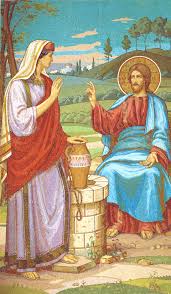
  • The Samaritan woman and the “Church Organization”

    The struggle against the idea of “Church as an Organization” is today just as difficult (if not even more difficult) as it was then. In 2000 years of Christianity nothing has changed, the True Church, The Catacomb Church is still very much denied today as it was back then. In the Gospel of the Samaritan Woman we read:

    “Our fathers worshipped in this mountain; and ye say, that in Jerusalem is the place where men ought to worship. Jesus saith unto her, Woman, believe me, the hour cometh, when ye shall neither in this mountain, nor yet at Jerusalem, worship the Father. Ye worship ye know not what: we know what we worship: for salvation is of the Jews. But the hour cometh, and now is, when the true worshippers shall worship the Father in spirit and in truth: for the Father seeketh such to worship him. God is a Spirit: and they that worship him must worship him in spirit and in truth.”

    Reading this passage shows very quickly that the struggle the Samaritans were having difficulty with was to recognize the claims of “officialness” of the Hebrews’ Church. The Samaritan woman questioned this “wisdom” of the Jews, yet Christ chose to reveal Himself to her rather than to the “chosen people” of that time. Let’s remember that the Samaritans were considered by the Jews to be in the wrong faith.

    Christ our Savior came to correct this wrong understanding, saying that the Church is not physically located here or there, but it is anywhere where people “worship the Father in spirit and in truth“. Yet the pharisees of today continue to insist that “you must be of this jurisdiction or that jurisdiction, or of this place or of that place”, or else you are not of the true faith …